“Implementing a deep geological repository is a team sport”
An interview with mining engineer Thomas Lautsch about operational safety, culture and implementation.
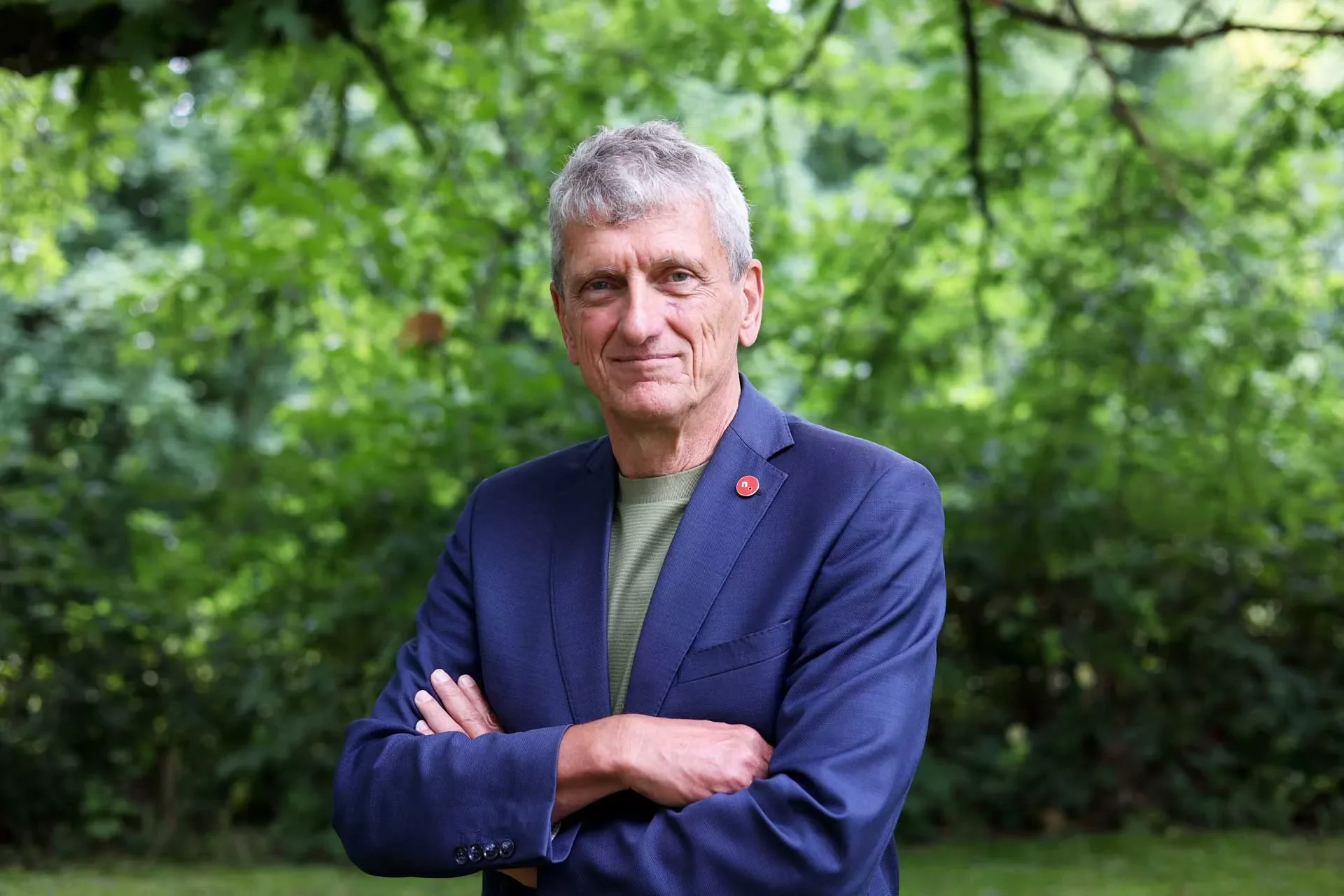
Thomas Lautsch was Managing Director of the German federal company for radioactive waste disposal (BGE) and has decades of experience in underground mining and in the management of large organisations.
Thomas, what can you tell us about your personal and professional background? I am a grandfather, father, partner, motorcyclist – and a mining engineer. I have changed jobs numerous times and worked in different countries and industries. More recently, I worked in the German radioactive waste disposal industry as Managing Director of BGE. I would like to apply everything I have ever learned here at Nagra – perhaps my last job before seeking retirement. I will share my lessons learned from the German repository programme with Nagra, both in terms of achievements as well as mistakes.
Thomas Lautsch
was Managing Director of the German federal company for radioactive waste disposal (BGE, Bundesgesellschaft für Endlagerung) and has decades of experience in underground mining and in the management of large organisations. Today he supports Nagra as a consultant. He and his partner live in the Ruhr region in Germany. He has three children and four grandchildren. His hobbies include anything that can be done outdoors: skiing, hiking, riding his motorcycle.
What insights can Nagra benefit from at this particular stage in the project? From an organisational and human perspective, promoting teamwork is key: to work together towards a common goal. When motivating people, the “what” matters less than the “how”: when we work with commitment and zeal, we will deliver good results. This is most easily achieved as a team. Humans are social beings. When collaboration is organised well – and includes networking and project structures – the results are better, too. I would like to contribute to this. This was also something that featured prominently in my work at the BGE.
Where does this strong team orientation come from? It has shaped my own career. I come from the Ruhr area, which had a substantial mining industry. I worked in the front line of underground mining for 13 years. Below ground, you rely heavily on your fellow miners, called “Kumpel” in German. A “Kumpel” is not just a colleague but a buddy or mate that you are ready to entrust your life to. The most important lesson when working underground is that you cannot get anywhere by working on your own, only together. We need to live this “Kumpel culture” when constructing the repository.
For your job here: where would you like to be particularly involved? Mostly on the operational side. I think operational safety is sometimes underestimated in the repository industry. To put it bluntly, constructing the repository will present the greatest dangers, second only to operating it. Operational safety and construction site safety are very, very important. Providing these requires robust technical solutions.
What do you mean by “robust”? Processes and machines must be essentially fail-safe. The overall repository system must be so safe that an error does not immediately result in an accident. To avoid anyone being exposed to radiation when handling waste packages, we will have to rely on remotely controlled, automated and autonomous processes. All of this boils down to two factors: first of all, it must be deeply engrained in everyone’s minds that they want to come home healthy and retire healthy. Secondly, we have to support this with technology and processes.
Have there been situations in your professional life that have particularly shaped this concern? We had a very serious accident during shaft construction at the Konrad repository. It happened because some rules were ignored while handling heavy loads in the shaft. The shaft offers little space and has an atypical structure. There is no set procedure to working there. This is why the learning curve is steep: always keep your eyes open when constructing shafts! Yes, I know, I sound like a management handbook. But put it into practice before something happens. Because when it does, we tend to look for a scapegoat. However, that rarely get us anywhere because, by then, it will be too late. It is crucial to learn from mistakes and create conditions in which risks can be recognised early on.
Why was it now the right time for you to switch to Nagra? Chance was also involved. My contract in Germany was coming to an end, I wanted to continue working and looked around. A good opportunity came up at Nagra. Our project of the century is right where I can make a meaningful contribution: I have been heavily involved with the operation of mines over the last 40 years, less so with post-closure safety. I believe that my experience is particularly useful to the organisation right now. Ten years ago, I probably would not have known what to contribute here.
What are the main differences and similarities between the German and Swiss repository processes? A key difference is the position in the life cycle: Switzerland’s repository is not yet under construction like the Konrad repository is – and it is certainly nowhere near closure like the Asse or Gorleben facilities. There are further differences with regard to regulation, authorities, policies and corporate culture – some of which are certainly also characterised by the respective national culture. What impressed me at Nagra was how friendly and approachable colleagues are with each other. I like the way I and other new employees are welcomed here – with a breakfast, little welcome gifts, a letter home. These are small gestures, but they are appreciated. And important.
With the entry into a new phase: what is needed to plan and implement Terradura? Similar to occupational safety, everyone involved needs the right attitude: to be goal-oriented, solution-oriented, professional, get to the point – and get it done. This mindset needs to be ingrained as values. It forms the mental basis for successful implementation. In technical terms, this means: consistently placing best practice and professionalism first and living it both inside Nagra and together with external partners.
Your background is in the mining industry. What is the difference between a mine and a repository? A mine extracts large quantities of material, be it coal, salt or ore. A deep geological repository requires comparatively few tunnels with small diameters into which the waste packages are emplaced. The excavated volume is much smaller –and therefore less invasive for the rock. This is precisely the aim for our repository: to leave the geological barrier as intact as possible. The mining of large quantities results in significantly more movements and geotechnical effects in the near-field. This is not the case in a repository, which is more of a static system. However, radiation is a special factor. This is why robustness and the prevention of incidents or accidents is even more important in a repository than in a mine.
You have been here for six months – while you still have a bit of an outside perspective: where do you see Nagra in the overall process? Nagra comes from decades of scientific work on the deep subsurface and on post-closure safety. Over the next few years, we must and want to keep developing: towards an organisation that understands the technical structure of the repository and consistently places operational safety at the forefront. That is exciting. Nagra is changing.
You were in charge of 2,000 people, now you are a consultant and “boss of none”. How does that feel? I’m enjoying it. I have always enjoyed mentoring young people. In my opinion, anyone getting on in years has the task of passing on knowledge. I have had many mentors in my life. I would have never gotten this far without them. It would be very fulfilling to be perceived as a mentor.
Is it also somewhat liberating to hand over responsibility? Even as supervisor of many, I have always slept pretty well. I can handle responsibility. But there were also difficult moments. In my professional life, several people in my immediate working environment suffered fatal accidents. That is an enormous burden. Occupational safety is the highest responsibility when you are in charge of construction sites or building companies. Still, I was never “uncomfortable” with responsibility. I am simply in a different phase of life now. Everything in its own time.
“Highly professional. Safe. Construction.”
Thomas Lautsch, Mining Engineer and a Nagra consultant
Is there anything else you would like to share with Nagra and its employees? Respect is the basis for project success. The post-closure safety experts have to respect the operational safety experts – and vice versa. Scientists must respect engineers – and vice versa. There is no such thing as “more important” or “less important”. We can only achieve our goals together. Constructing a deep geological repository is a team sport.
You may also be interested in
We believe in transparency. Here you can find the latest updates and information about this landmark project.
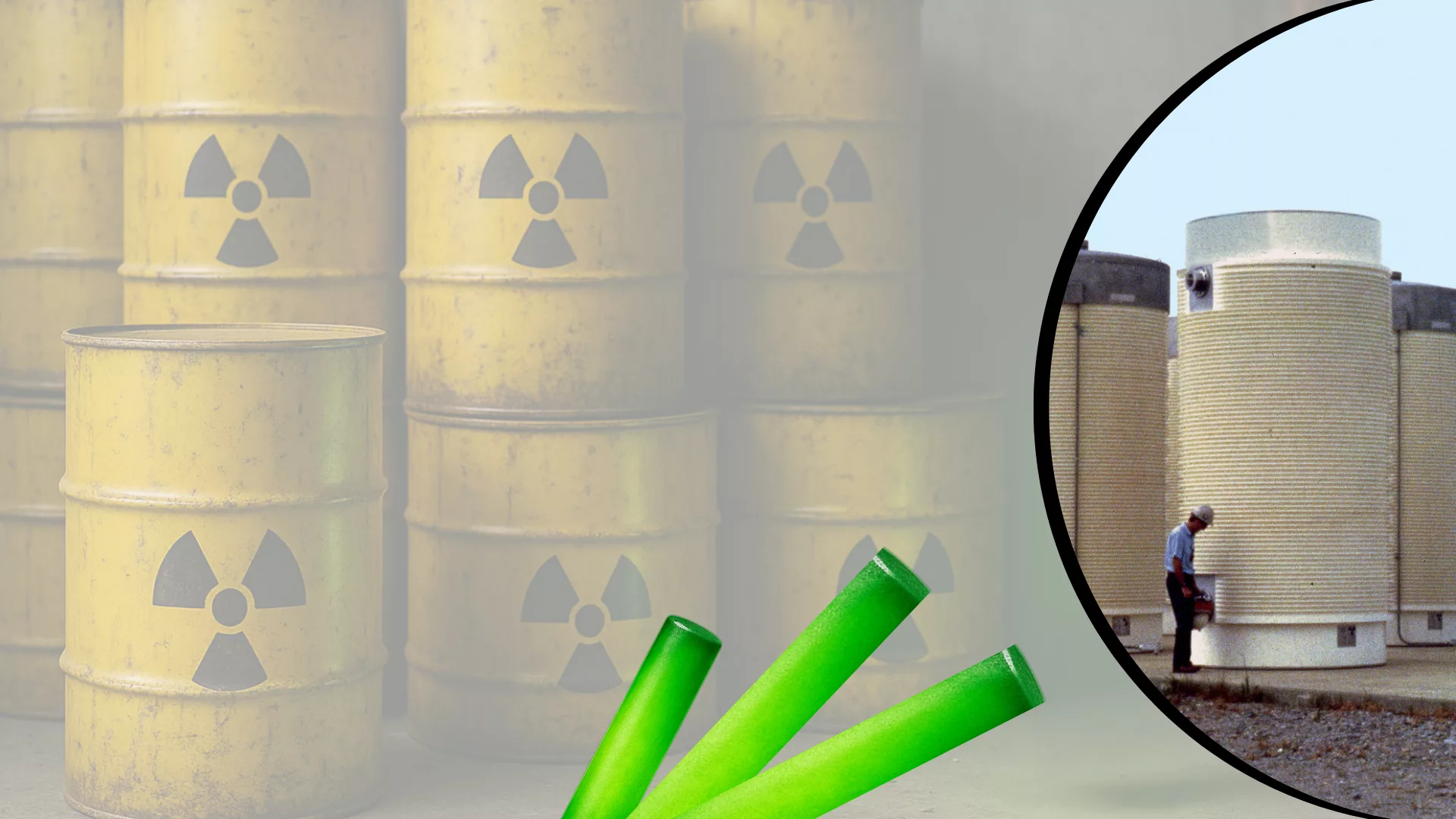
Yellow Barrels and Glowing Rods? What Our Radioactive Waste Really Looks Like
There are various types of radioactive waste. However, popular culture almost always misleads us about their properties…
.jpg)