This article was translated by an AI
Yellow Barrels and Glowing Rods? What Our Radioactive Waste Really Looks Like
There are various types of radioactive waste. However, popular culture almost always misleads us about their properties…
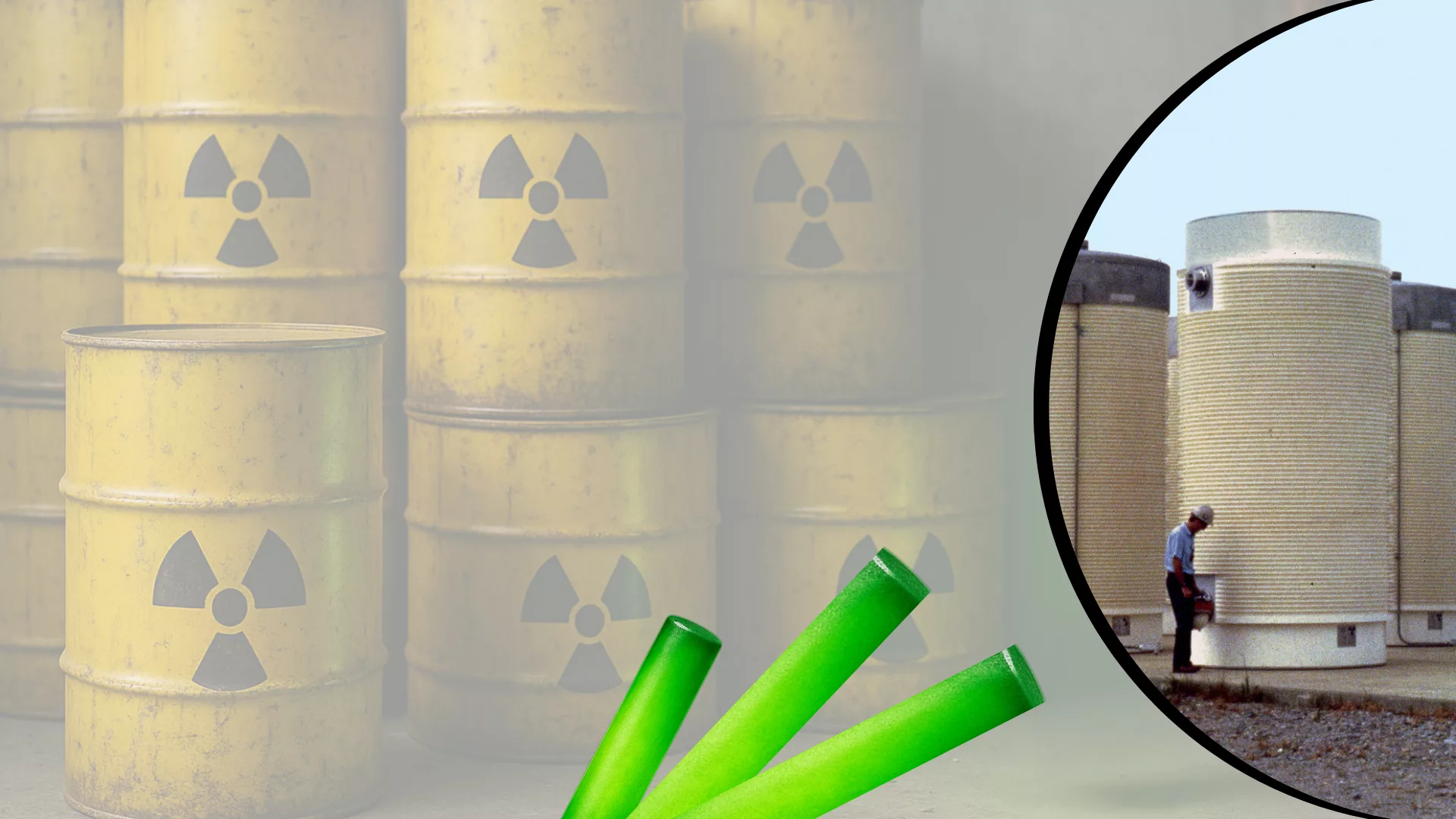
How do you imagine radioactive waste?
Vielleicht als a green, glowing sewer in yellow barrels? Such images swirl around in many minds. We owe this, among other things, to the Simpsons. Fortunately, the situation in Springfield has little to do with reality. And anyway: radioactive waste is not all the same.
An overview of Switzerland's radioactive waste, its characteristics and where it is generated.
Dangerous are they all
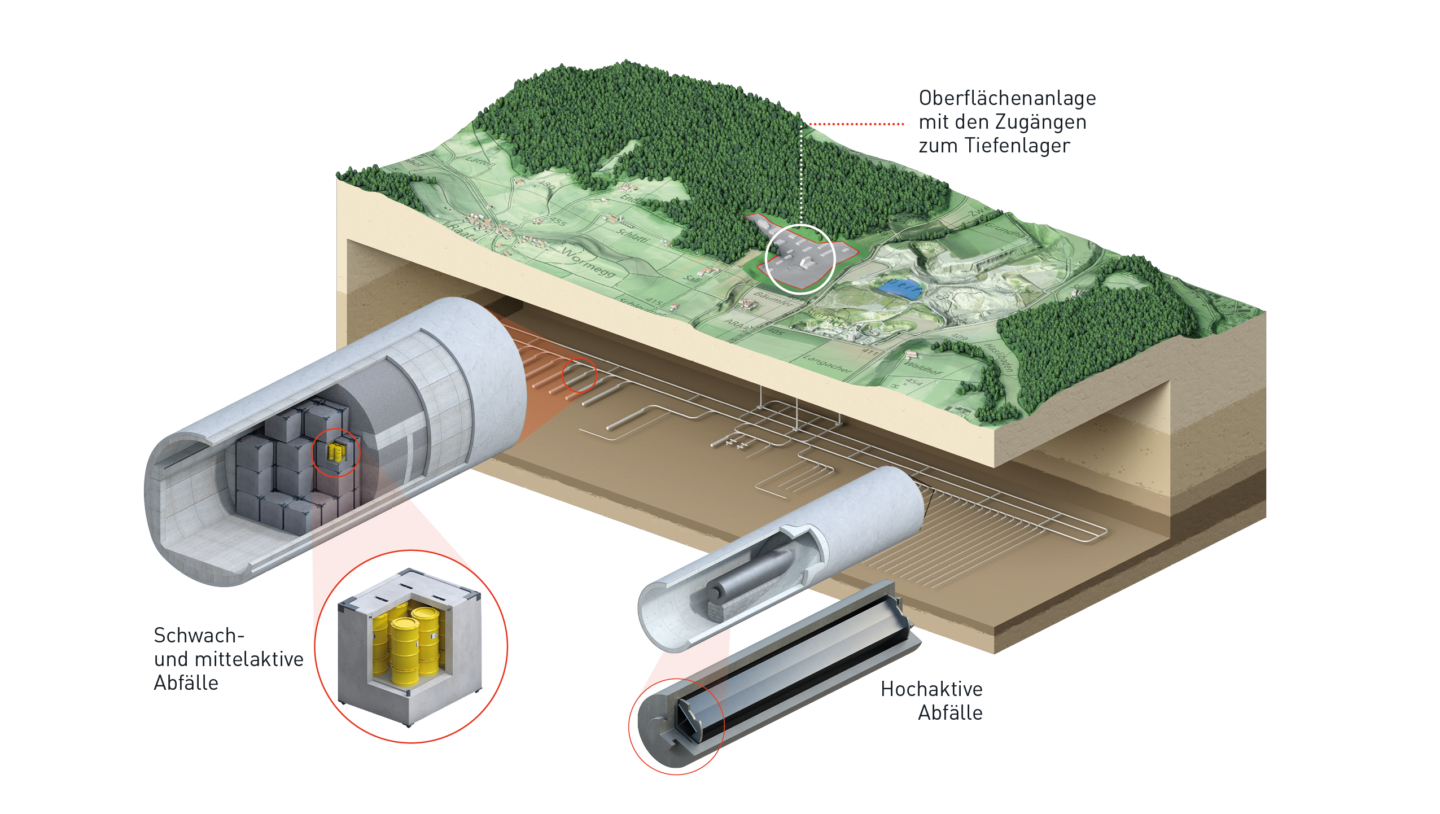
No matter whether we call the radiating remnants atomic waste or radioactive waste: These substances are dangerous because they emit ionizing radiation – in everyday language we say: They are radioactive.
For this reason, people and the environment must be protected. In Switzerland, the solution is: disposal in a deep geological repository.
In the first place, a distinction is made between high-level waste (HLW) and low- and intermediate-level waste (L/ILW).
As a third category, alpha-toxic waste (ATW) is sometimes mentioned. It is a special case and there is only very little of it: These wastes contain a larger amount of so-called alpha emitters. This type of radiation can be easily shielded. However, alpha emitters usually have a long half-life. This means: They decay only slowly and therefore emit radiation for a very long time.
Radiation yes, glow no: Fuel rods from nuclear power plants
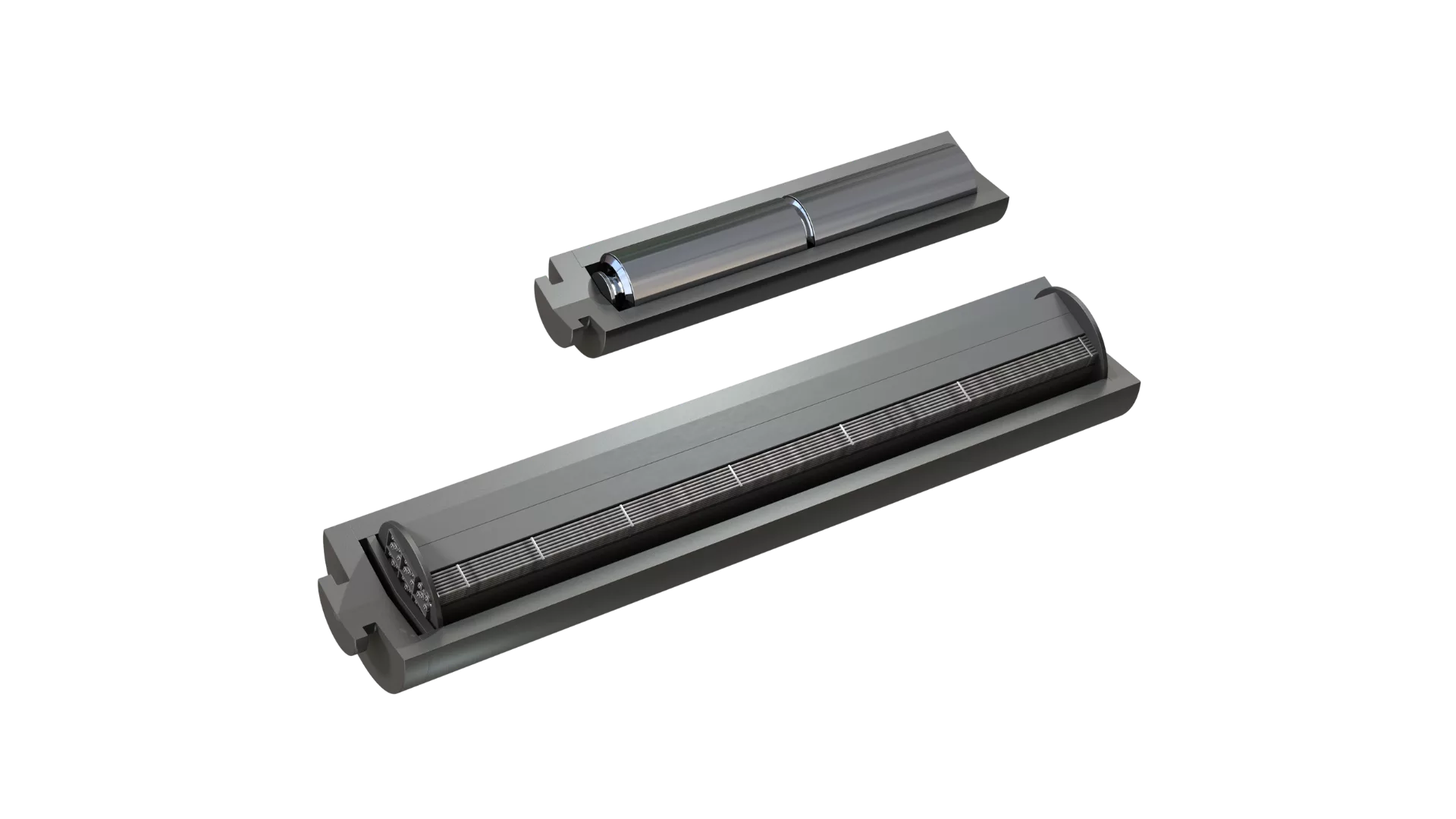
High-level waste is produced in nuclear power plants. Primarily, this consists of spent fuel assemblies. They look far less spectacular than depicted in The Simpsons: they are neither green nor do they glow. However, they are certainly dangerous: the radioactivity of spent nuclear fuel will reach natural levels only after approximately 200,000 years at the earliest.
Why radioactivity is often illustrated as glowing, one can only speculate. A possible reason: Radioactivity is invisible, but precisely for that reason it is dangerous. This danger should be made visible in films or comics. Hence, the radiation is staged as glowing - mostly green.
The green uranium rod has always had a prominent role in the Simpsons intro
The high-level waste makes up only about ten percent of the volume of Swiss radioactive waste. However, it is responsible for 99 percent of the radioactivity and generates a lot of heat.
But the significantly larger portion of Swiss radioactive waste consists of low- and intermediate-level waste.
The ones in the yellow drums – but only sometimes...
Ninety percent of Swiss radioactive waste is low- and intermediate-level. It mainly comes from nuclear power plants: residues from water purification, contaminated protective clothing or tools are examples of this. In addition, there is the waste generated during the decommissioning of nuclear power plants, or that will still be generated.
Also medicine, industry and research produce radioactive waste. For them, the federal government is responsible.
Low- and intermediate-level waste produces less heat. In addition, most radioactive substances in these wastes decay more quickly. However, it still takes approximately 1000 years for the radioactivity of most substances to decrease to a harmless level.
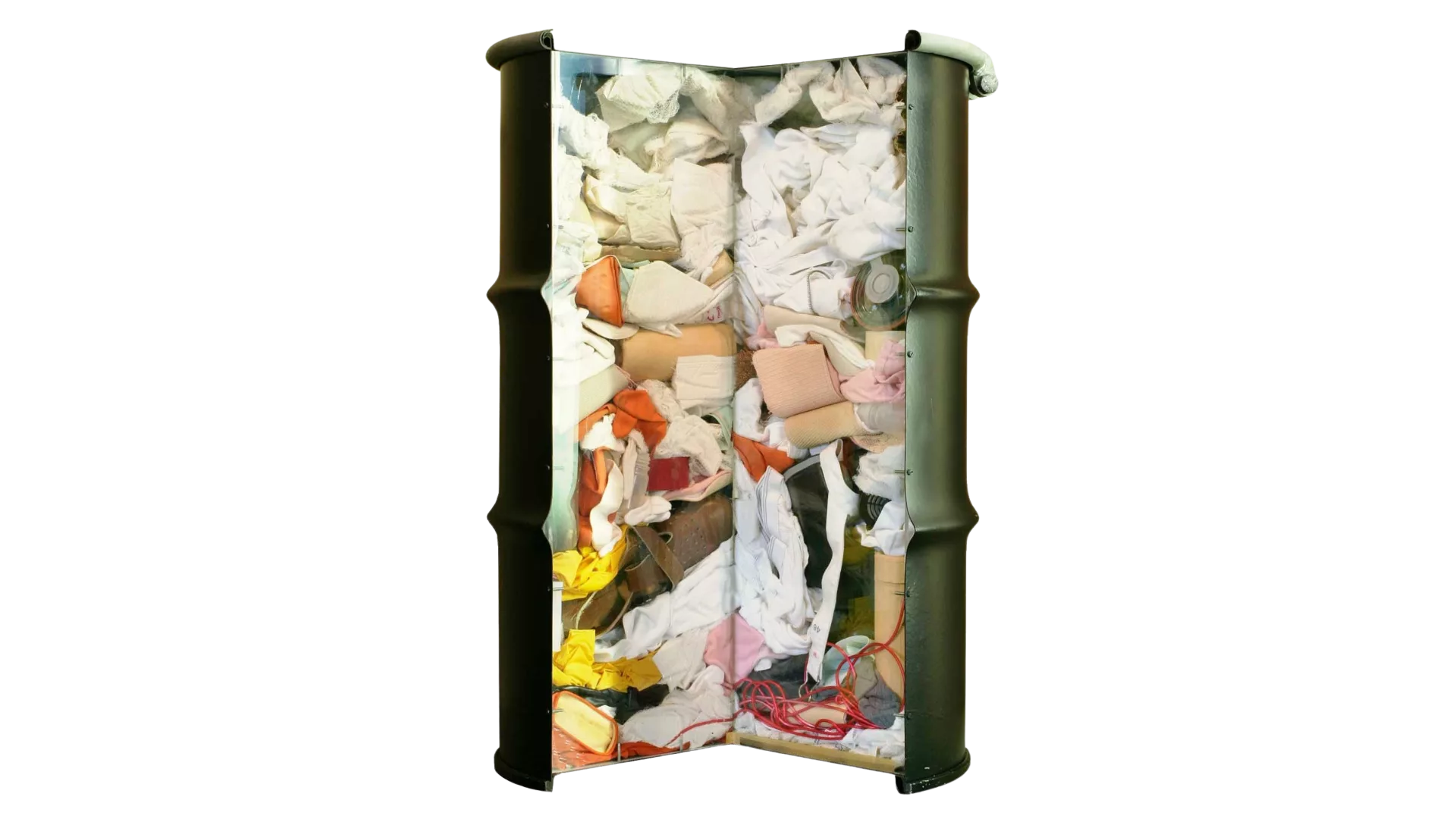
But what's the story behind the yellow drums?
Now, they do exist. However: There are still many other containers, which are also used. Far from all radioactive waste ends up in the famous yellow bin.
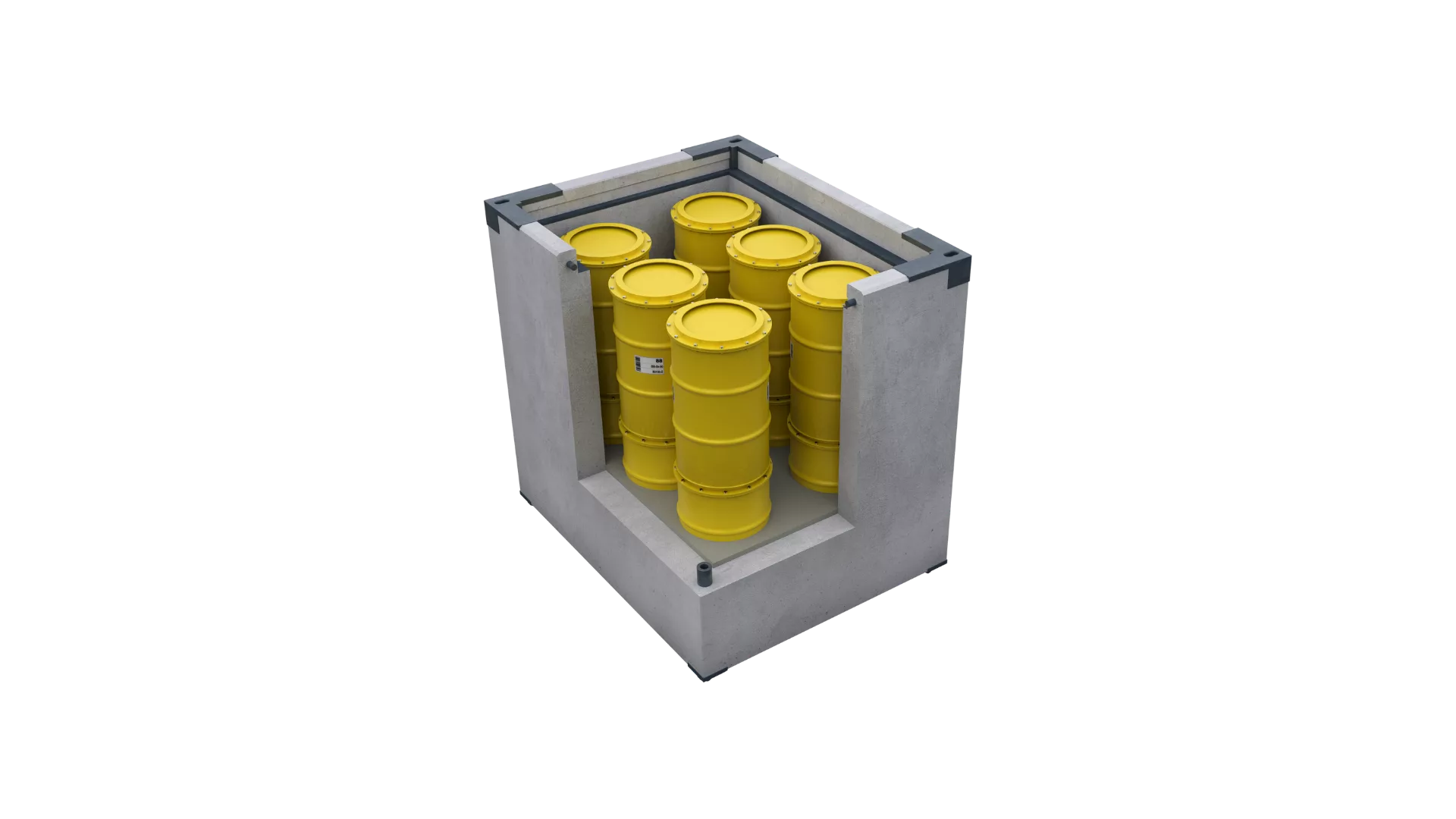
And most importantly: The image of loosely lying barrels will not exist in a Swiss deep geological repository. The barrels are first carefully packed into larger concrete containers and the empty spaces are filled with cement mortar. Only then is the disposal carried out in the deep geological repository.
Certain wastes are burned in a plasma burner at temperatures of up to 20,000 degrees. Although this process does not reduce, let alone eliminate, radioactivity, the volume of waste is significantly reduced.
During the melting process, glass is mixed with the molten waste. As a result, a solid mass forms upon cooling - ideal for disposal. Another image that has become firmly established in many people's minds is that of leaking liquids. However, all radioactive waste in Switzerland is converted into a solid form.
The green sewer, dripping from the barrel: It definitely does not exist. And that is a good thing too.
Images: 20th Century Fox Television / ZWILAG / KI
You may also be interested in
We believe in transparency. Here you can find the latest updates and information about this landmark project.
.jpg)
Nagra News – June 2026
.png)
30 years of research – for the sake of hundreds of thousands of years of safety
Research on the Opalinus Clay has been carried out at the Mont Terri Rock Laboratory since 1996. The clay rock is the key to the post-closure safety of Switzerland’s deep geological repository.