This article was translated by an AI
Step by Step: The Way to a Deep Geological Repository
How do you advance a century-long project like the deep geological repository? And how do authorities and politics accompany the endeavor from the theoretical concept through to the concrete project and construction?
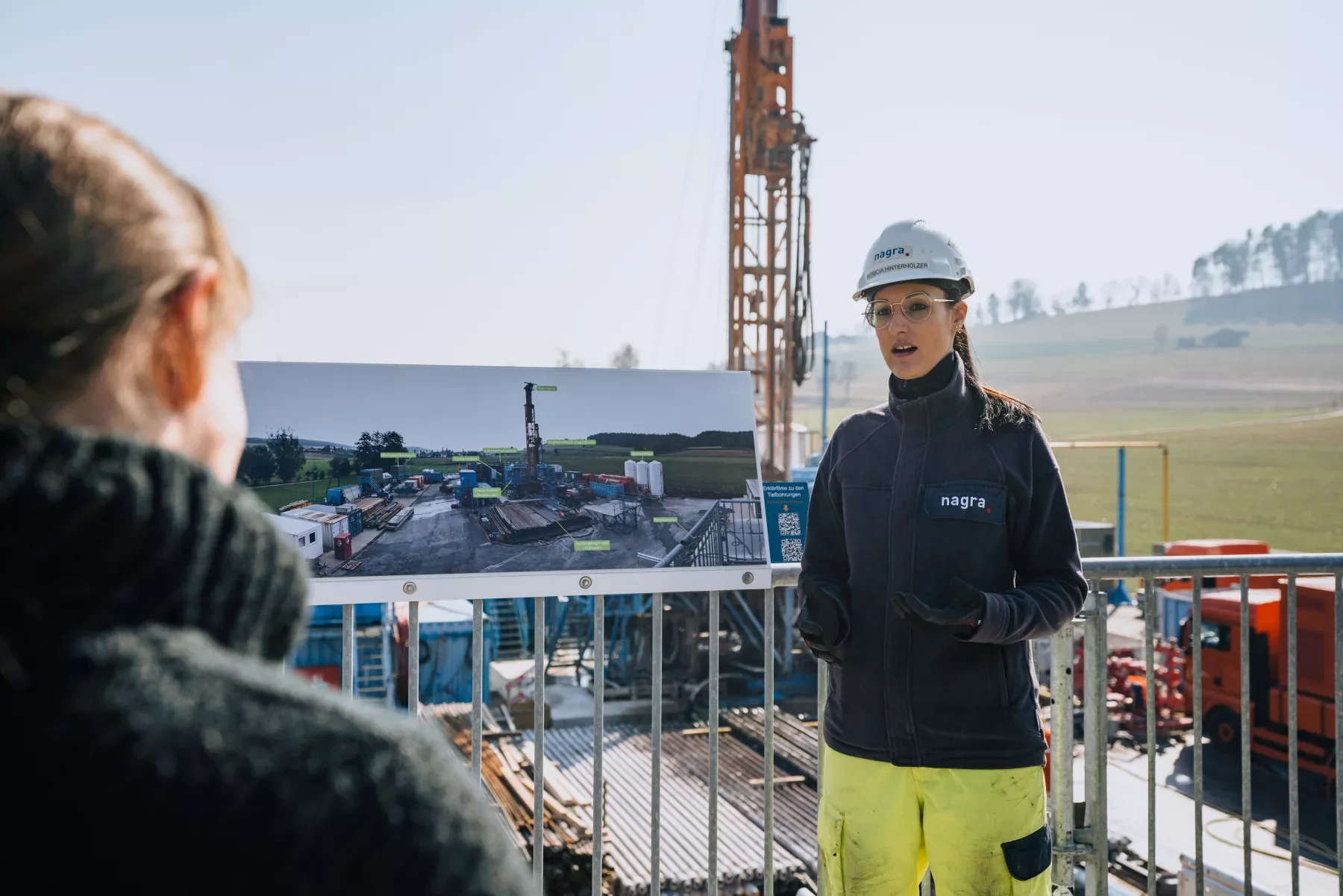
Why does the disposal of radioactive waste take so long? When will the final repository finally be built? Those who do not regularly deal with Switzerland's radioactive legacy are likely to ask such questions. And rightly so. The National Cooperative for the Disposal of Radioactive Waste (Nagra) has existed for over 50 years. And according to current planning, it will take more than 20 additional years before the first waste is placed in a deep geological repository. So, what has Nagra done during this long time? What is it working on today?
General green light from the cantonal government
Twenty years ago, in 2006, the Federal Council considered the so-called demonstration of disposal feasibility as having been provided. The Nagra had submitted this demonstration four years earlier. In it, it showed that Switzerland's highly radioactive waste can be safely disposed of in the Opalinus Clay.
The dense clay rock is practically impermeable to water. In addition, the Opalinus Clay seals any cracks that may form. Moreover, most of the radioactive particles, the radionuclides, remain adhered to it.
These three properties are the reason why Switzerland's deep geological repository is to be constructed in a rock layer approximately 100 metres thick composed of Opalinus Clay. From Nagra's perspective, this layer at the site of Nördlich Lägern in the Zürcher Unterland is best suited for constructing the repository. Therefore, it submitted the so-called general licence application (RBG) in November 2024.
No new power plant without safe waste disposal
The path to this site was a long one. And it was not linear; at some points, corrections and additional loops were needed, thus requiring more time. In 1978, six years after the founding of Nagra, the requirement was set out in the Atomic Energy Act: A general licence for a new nuclear power plant will only be granted if the safe disposal of radioactive waste can be assured.
In the demonstration of disposal feasibility, Nagra had to show this. For low- and intermediate-level radioactive waste, the Federal Council considered this demonstrated in 1988. At the same time, Nagra had submitted such a demonstration for high-level waste, namely in the crystalline rocks of northern Switzerland. This is the deep-lying rock layer made of granite, also referred to as basement rock.
But then the first correction came about. It was acknowledged that disposal in crystalline rock, in principle, functions. However, according to the supervisory authority at that time, there was still no demonstration of a site underground where this rock occurs in sufficient volume and without major disturbances. Above all, it had become clear how difficult it would be to find such a location from the Earth's surface at such great depth.
The Milestones
1988: Nagra demonstrates that low- and intermediate-level waste can be disposed of in Switzerland.
2006: The Federal Council recognises the demonstration by Nagra that high-level waste can also be disposed of in Switzerland.
2024: Nagra submits the general licence application for a deep geological repository in Nördlich Lägern.
2029: The Federal Council decides on the granting of the general licence, after which the Parliament must deliberate on it.
Ca 2031: If a referendum against the decision of Parliament is initiated, there will be a public vote around 2031. If the general licence is granted, Nagra will submit a construction licence application and later an operation licence application.
Therefore, the Federal Council rejected the demonstration for high-level waste as a whole as insufficient. It called on Nagra to expand its geological investigations to include further rock types, namely the sediments above the basement rocks.
So various such disposal rocks were explored, including the aforementioned Opalinus Clay. For this clay rock, finally, Nagra submitted the demonstration of disposal feasibility in 2002. External experts examined the submitted demonstration, which the Federal Council approved four years later. Thus, the federal government confirmed that the disposal of high-level waste in Switzerland is generally possible.
A "yes, but" from the Federal Council
At the same time, another correction occurred on the long way to the deep repository. Although the Federal Council considered the safe disposal of high-level waste in Opalinus Clay to be basically possible, it rejected Nagra's request to focus on the investigation site for the disposal feasibility demonstration in the Zürcher Weinland.
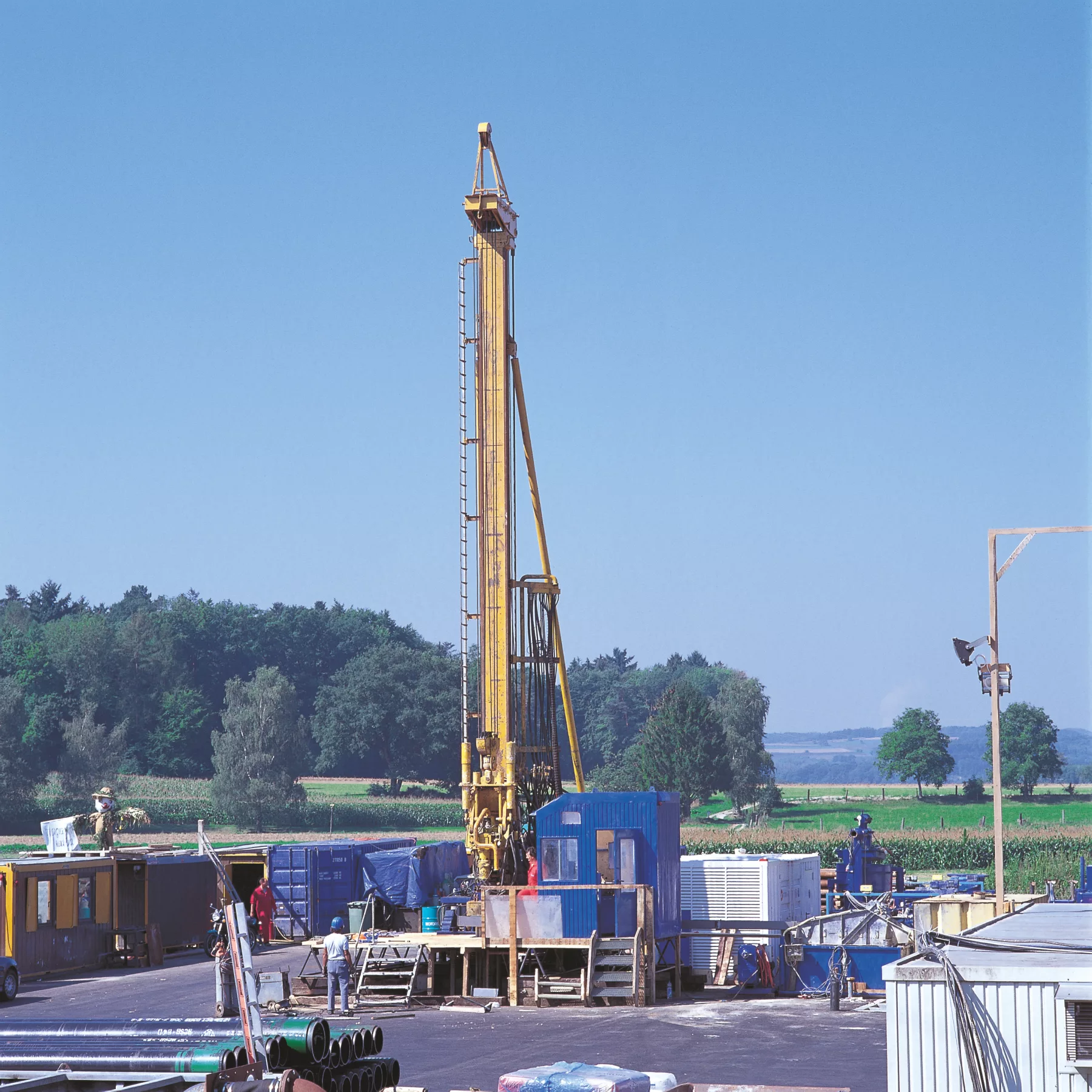
For Nagra and Switzerland, this meant returning to the first field of the site selection process. In 2008, under the leadership of the Swiss Federal Office of Energy (SFOE), the so-called Sectoral Plan for Deep Geological Repositories was launched. In stages, it regulates the search for the best-suited site. Currently, the site selection process is in its third and final stage.
Narrowing down proceeded step by step
The starting point of the Sectoral Plan was a blank map. This meant that all rock types and regions of Switzerland were examined again. At the end of the first stage in 2011, several potential site areas were on the table. Subsequently, these areas were further narrowed down according to scientific criteria, with Opalinus Clay remaining in the running.
Nagra proposed the areas named Jura Ost and Zürich Nordost (formerly Zürcher Weinland) for further geological investigations, but not the area Nördlich Lägern. The reason: Although it would also be possible to construct a safe repository there, the data available at that time suggested disadvantages due to the great construction depth compared to the other two regions.
Once again, there was a correction by the authorities. Nagra's argumentation did not align with, among others, the Swiss Federal Nuclear Safety Inspectorate (ENSI) and requested further data. Therefore, Nagra also carried out more in-depth geological investigations in Nördlich Lägern during the third stage. This included, among other things, several deep boreholes in addition to seismic measurements.
Nördlich Lägern is best
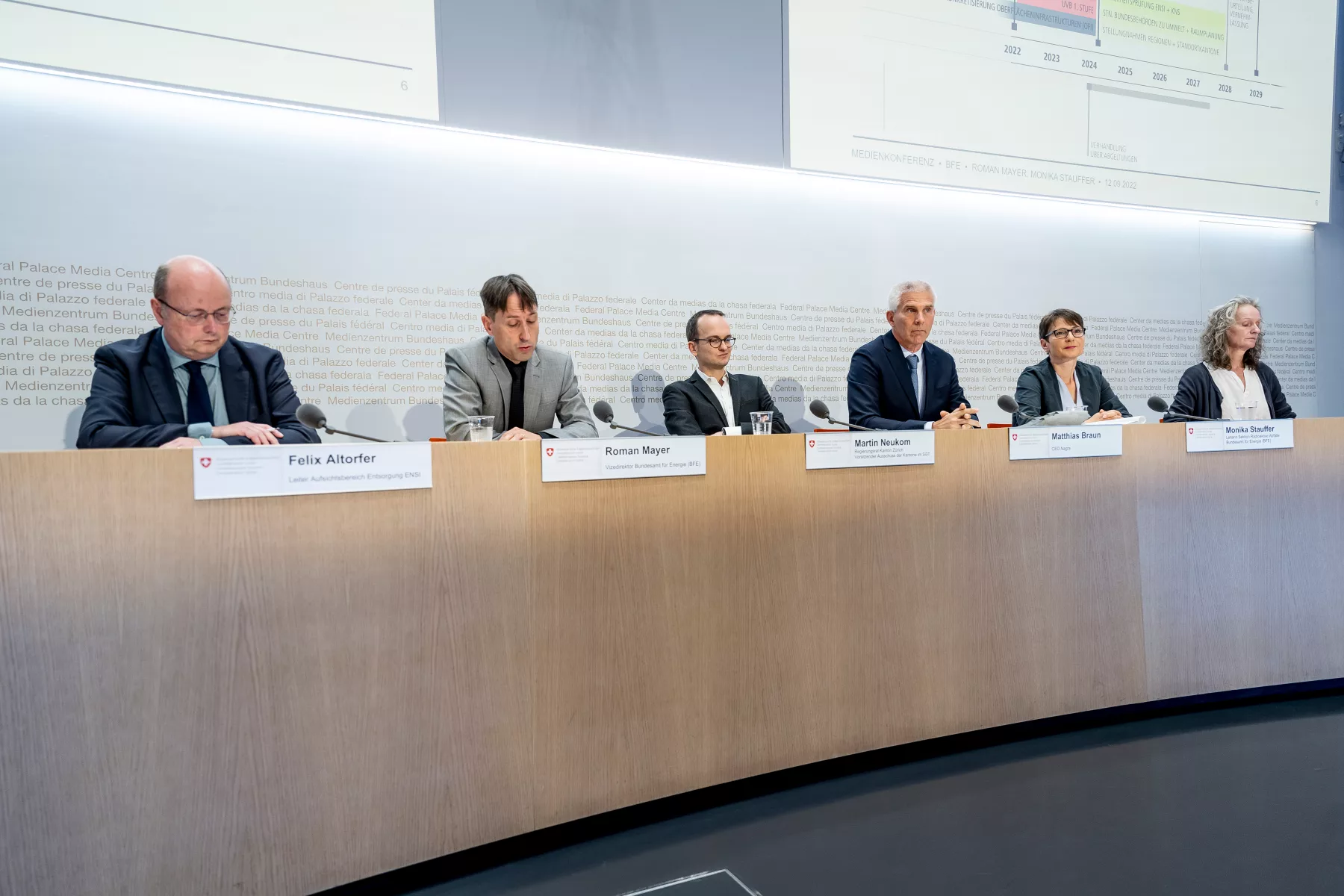
At the beginning of 2022, Nagra concluded these investigations. The interim result: Jura Ost, Nördlich Lägern and Zürich Nordost are suitable for a deep geological repository. At the same time, the newly obtained data showed that Nördlich Lägern performs best with regard to several evaluation criteria.
That is the safest site for the deep geological repository.
Therefore, Nagra submitted the general licence application (RBG) for Nördlich Lägern to the federal government in November 2024. The application is currently being thoroughly examined and will be made publicly available later. Nagra has already published the documents related to this on www.drbg.ch in the year 2025. The Federal Council is expected to decide on it around 2029, followed by the Parliament. If a referendum is initiated, a public vote on the site for the Swiss deep geological repository will take place in the early 2030s.
A solid framework for the construction project
And what does Nagra do until then? It develops the specific deep geological repository for which it will submit a construction licence application - provided that the general licence is granted.
The basis for this development work is the site Nördlich Lägern, which is best suited for constructing a safe deep geological repository. For this site, Nagra has applied for a general licence (RBG) within which it is now developing the construction project.
Thus, the previous storage concept, which was site-independent, becomes a project at the proposed site. This is what Nagra is working on in the coming years. Step by step, more and more things are being defined – although not all yet.
Don't miss out on better solutions
The step-by-step approach is intended to prevent things from being decided too early, thus avoiding better solutions. For example, should Nagra already define the details of the tunnel boring machine today and start building it? No, it is still too early for that. Otherwise, it would have to align everything around this one tunnel boring machine.
Only in the subsequent licensing steps, namely the construction and later the operational licence, are more and more parameters or details defined. This step-by-step approach enables the deep geological repository project, which extends over decades, to steadily progress while at the same time taking account of technical advances.
You may also be interested in
We believe in transparency. Here you can find the latest updates and information about this landmark project.
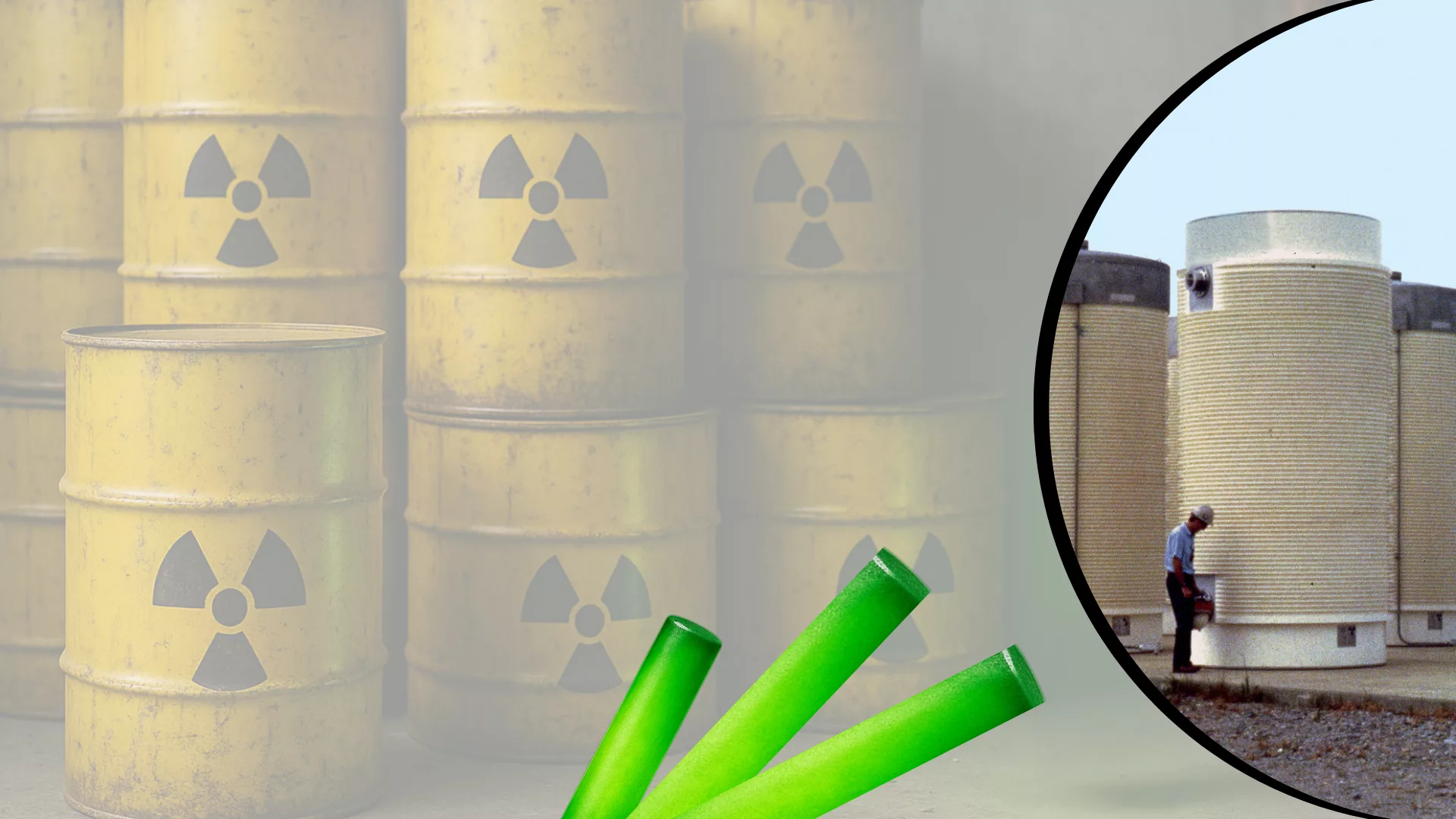
Yellow Barrels and Glowing Rods? What Our Radioactive Waste Really Looks Like
There are various types of radioactive waste. However, popular culture almost always misleads us about their properties…
.jpg)