Why do we need a deep geological repository?
Radioactive waste must be safely isolated until it has decayed to a level at which it is no longer hazardous. Whether exposed to dangerous situations such as social upheaval due to a war or natural erosion caused by future glaciers: our radioactive waste must be safely isolated from such influences so as not to jeopardise humans and the environment. A deep geological repository offers the best solution and has thus been anchored in Swiss legislation. Nagra has been mandated to plan and construct Terradura, Switzerland’s deep geological repository.
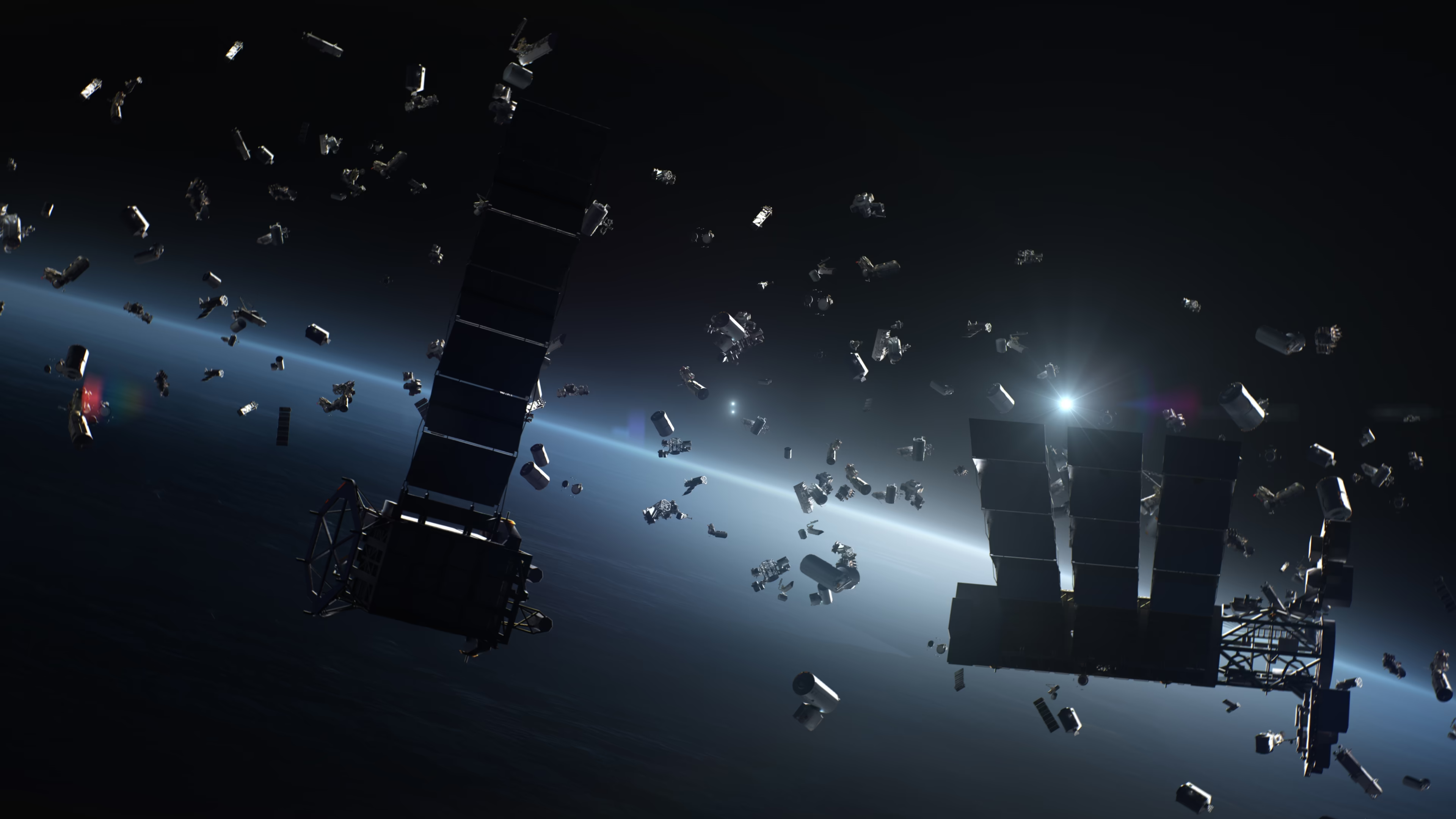
Why do we not just shoot the radioactive waste into space?
Simply shooting radioactive waste into space sounds like a conveniently clean and final solution. However, a look at the risks and costs shows that the idea has more drawbacks than advantages. For example, around 10 per cent of all rocket launches fail, which could lead to a shower of radioactive waste.
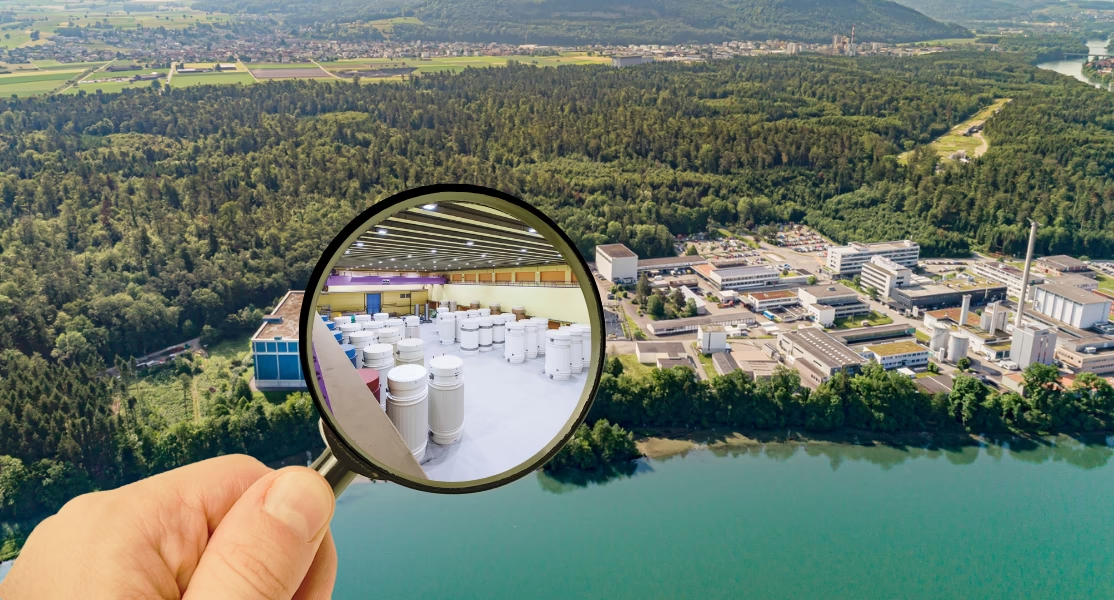
Why do we not simply store the waste at the surface?
It is impossible to predict today what the world will be like 100 or 2,000 years from now. In contrast, deep below ground, time essentially comes to a standstill. Change occurs at a very slow rate.
Storing the waste at the earth’s surface also presents an ethical problem because we pass on the entire responsibility of waste disposal to future generations. In a deep geological repository, the waste will remain safe without the need for human intervention.
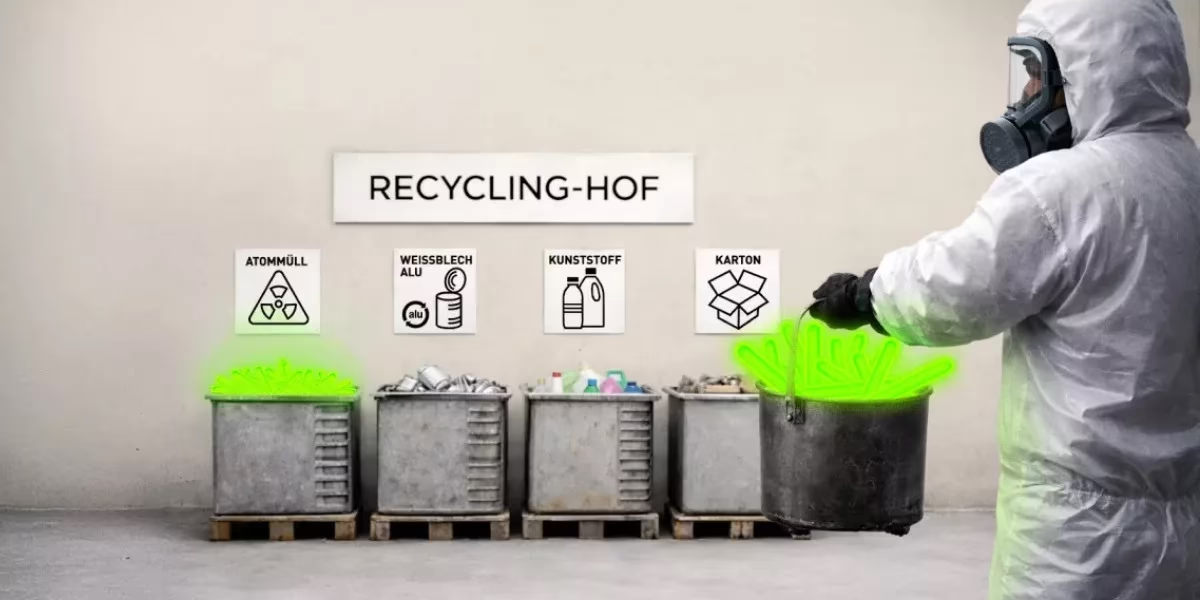
Why do we not just recycle the waste?
The idea of simply recycling and reusing radioactive waste – like any other waste products – appears logical. In fact, there is an idea known as transmutation, which involves converting long-lived and particularly hazardous waste into less long-lived waste. The process would deliberately alter the atomic nuclei, thereby reducing the radiation duration from several hundred thousand years to between a few hundred and one thousand years. In practice, however, this technology is still not applicable on an industrial scale. It is extremely demanding from a technological perspective and would require the construction of new special reactors and reprocessing plants, which is currently not permitted in Switzerland.
In addition, even a functioning transmutation process would not solve the problem completely as it only works for some of the high-level radioactive waste. The transmutation process would also generate additional low- and intermediate-level waste that cannot be further transformed. The transmuted substances themselves will remain dangerous for a long time and will still have to be safely kept away from humans and the environment.
How is radioactive waste produced?
Our radioactive waste mainly arises from the generation of electricity in nuclear power plants, for example in the form of spent fuel assemblies. Radioactive waste is also produced during the operation and c dismantling of nuclear power plants. Other types of radioactive waste are produced from applications in medicine, industry and research.
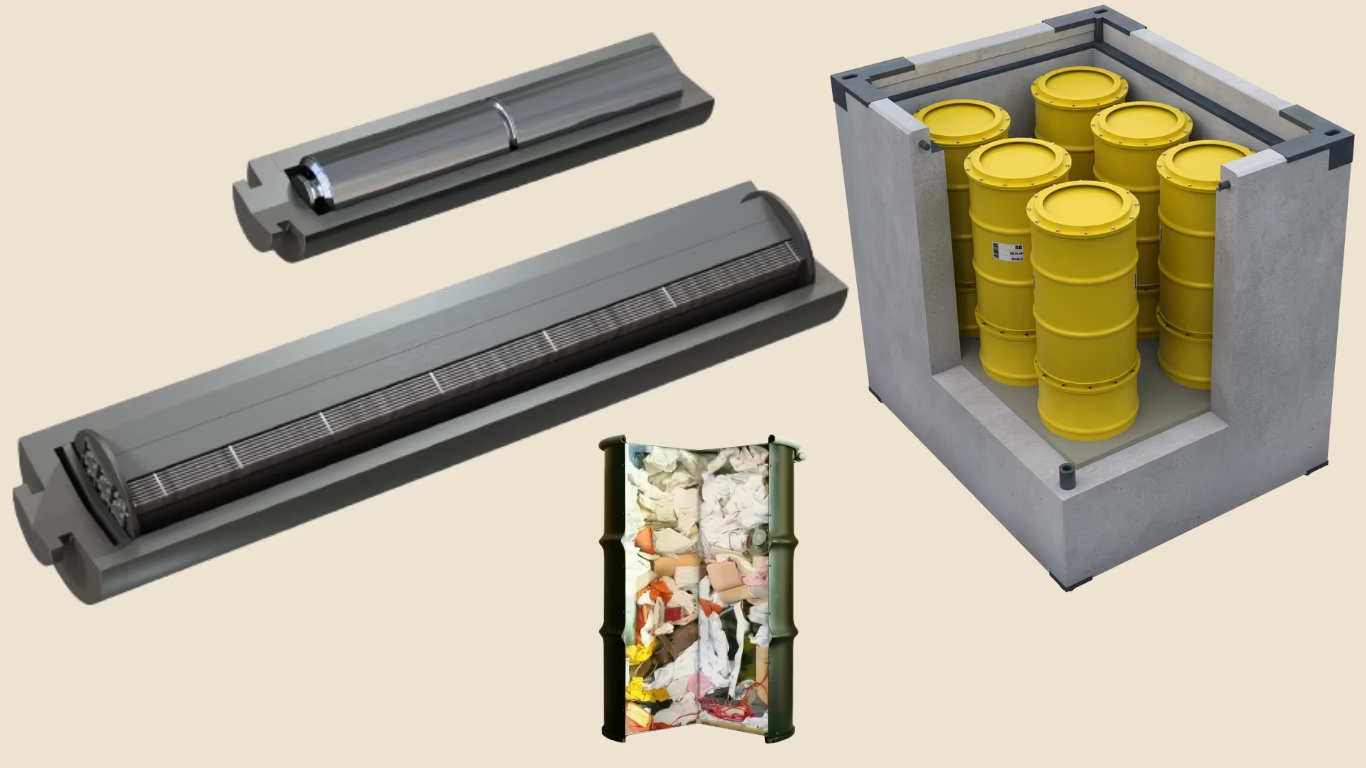
How does a repository like Terradura work?
Who are we?
Nagra is driving forward a project of the century: Terradura, Switzerland’s deep geological repository. We will eventually be able to safely dispose of our radioactive waste in it – for the protection of humans and the environment. Here at Nagra, we are committed to achieving this goal by dedicating our scientific and technological expertise and seeking dialogue with the public.