Nagra News – Terradura: Switzerland's Deep Repository Enters a New Phase
Switzerland's deep repository has a name: Terradura. The focus is shifting from research to construction — the Nagra newsletter explains what that means, featuring new expert hires, ongoing research at Mont Terri, and a fact-check on radioactive waste myths.

Hello,
After decades of research, construction and operation are now moving to the forefront: theory is giving way to practice. This future repository now has a name: Terradura. A new phase has begun.
Research remains essential, but attention is increasingly shifting to the construction and operation of the deep repository. In this newsletter, we explain what that means in concrete terms.
Mining engineer Thomas Lautsch also brings solid hands-on experience. He recently joined Nagra, with several decades of experience in underground construction. Once leading a team of 2,000 people, he now has no managerial responsibilities at Nagra.
In our in-depth interview, he explains what draws him to this new role and what experience he hopes to bring to the table.
Research remains the foundation of this project. At the Mont Terri underground laboratory, Nagra is studying, together with international partners, how radioactive particles move through Opalinus Clay — the rock in which the deep repository is to be built.
Myths die hard. They fascinate and often prove more persistent than facts. Spectacular stories about radioactivity and radioactive waste regularly circulate on the internet and social media. Some are striking, but they don't always reflect reality. One of them raises the question: Is the "radiation-eating fungus" a solution to nuclear waste?
We take a closer look. We explain what the black fungus Cladosporium sphaerospermum can actually do — and why it is generating genuine scientific interest.
While it is widely known that nuclear power plants produce radioactive waste, it is less commonly known that certain medical, industrial and research applications generate it too.
In Nagra's scientific forum, we explore the origins of radioactive waste.
I would like to continue developing this newsletter and look forward to hearing from you. Which topics related to the deep repository interest you most? Which questions would you like to see explored in more detail?
Feel free to write to me — I read every message with interest: matthias.goebel@nagra.ch
You may also be interested in
We believe in transparency. Here you can find the latest updates and information about this landmark project.
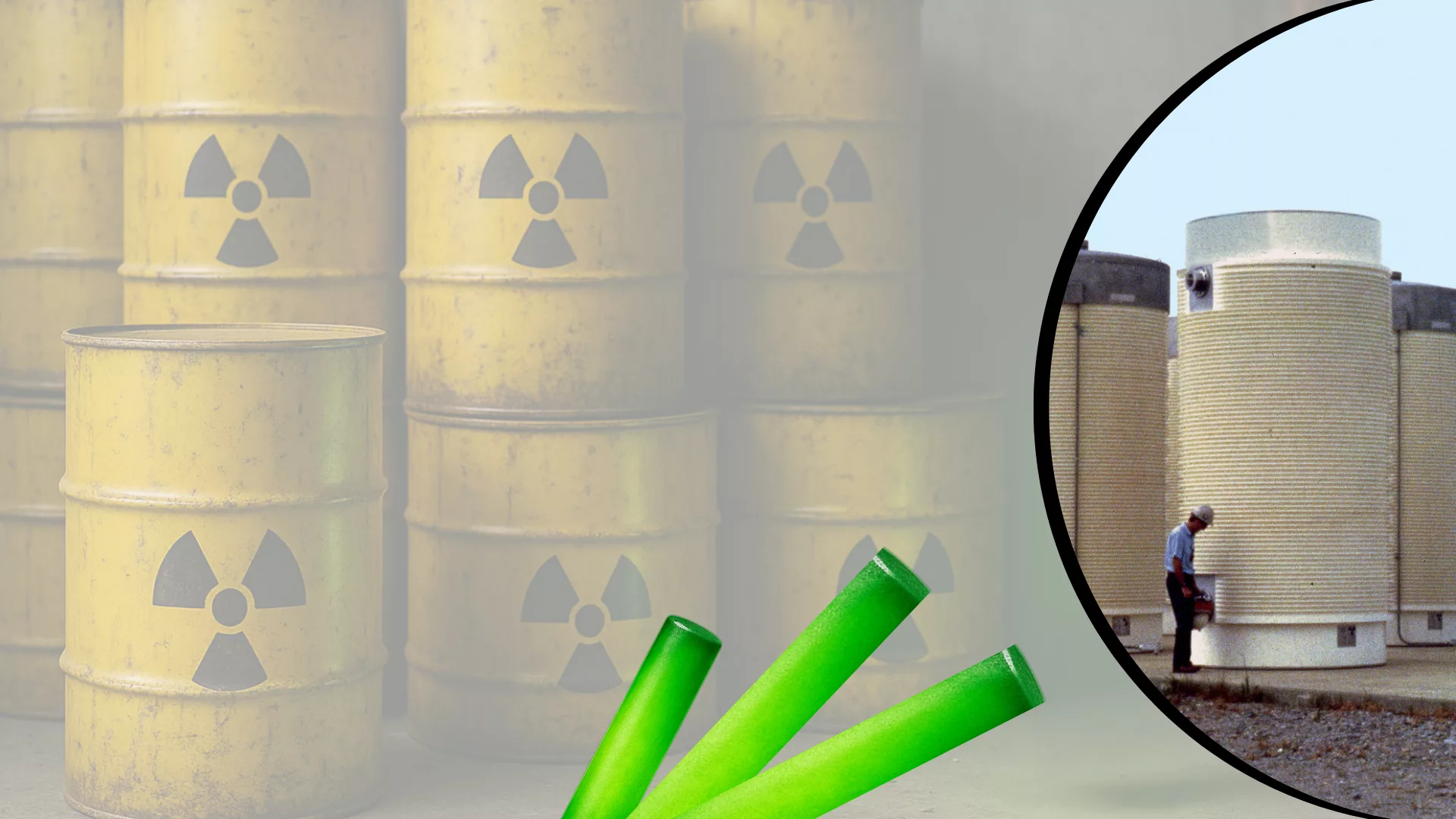
Yellow Barrels and Glowing Rods? What Our Radioactive Waste Really Looks Like
There are various types of radioactive waste. However, popular culture almost always misleads us about their properties…
.jpg)