This article was translated by an AI
A 'Submarine' in the Middle of a Mountain?
Because of its yellow color and size, a so-called Megapacker in the Grimsel Rock Laboratory is called 'Yellow Submarine' by the researchers. The 'submarine' is the core component of important experiments.
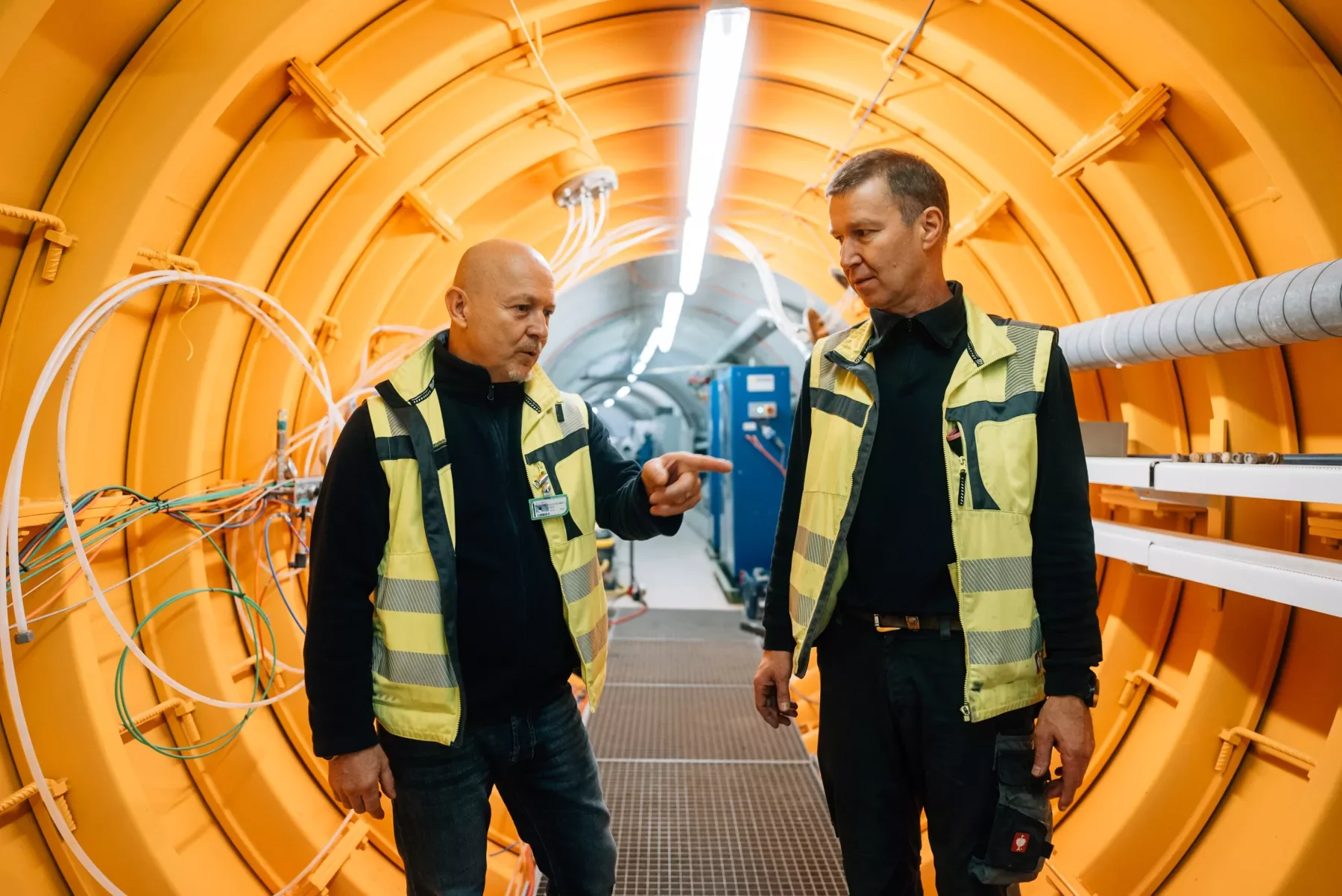
How do radioactive particles move through the host rock that is intended to take up the radioactive waste? This question is central to the long-term safety of a geological deep repository. To this end, since 2004, a major experiment called Colloid Formation and Migration (CFM) has been running at the Grimsel Rock Laboratory.
The term "colloid" refers to several particles that are stuck together – the Italian word «la colla» for "glue" reminds us of this. The CFM experiment investigates how such aggregated particles influence the movement of radionuclides.
The rock functions as a safety barrier in the deep repository; it can be disturbed. The CFM experiment focuses on such a disturbed zone. When this zone formed, the broken rock scraped against each other, forming a layer of crushed rock in between. Later, during reactivation of the fracture zone, this layer became brittle - and thus significantly more permeable than intact rock.
The experiment investigates how radionuclides move within it, in interaction with colloids. The latter can indeed weaken those mechanisms that retain radionuclides in the rock.
Like a balloon in the tunnel
The core of the CFM experiment is so-called Megapacker. Because of its yellow colour and size, it is also called "Yellow Submarine" by the researchers, that is, "yellow submarine". A packer is like a balloon, with which a void in the rock can be sealed.
This can be a borehole or, as in the CFM experiment, a drift. The water-filled megapacker creates high pressure on the drift wall where the fault zone is located. But to what end? How quickly radionuclides move through the rock depends strongly on the hydraulic gradient. This is a pressure difference that also exists between the rock and the drift as an artificial void. As a result, a flow movement towards the drift wall is created.
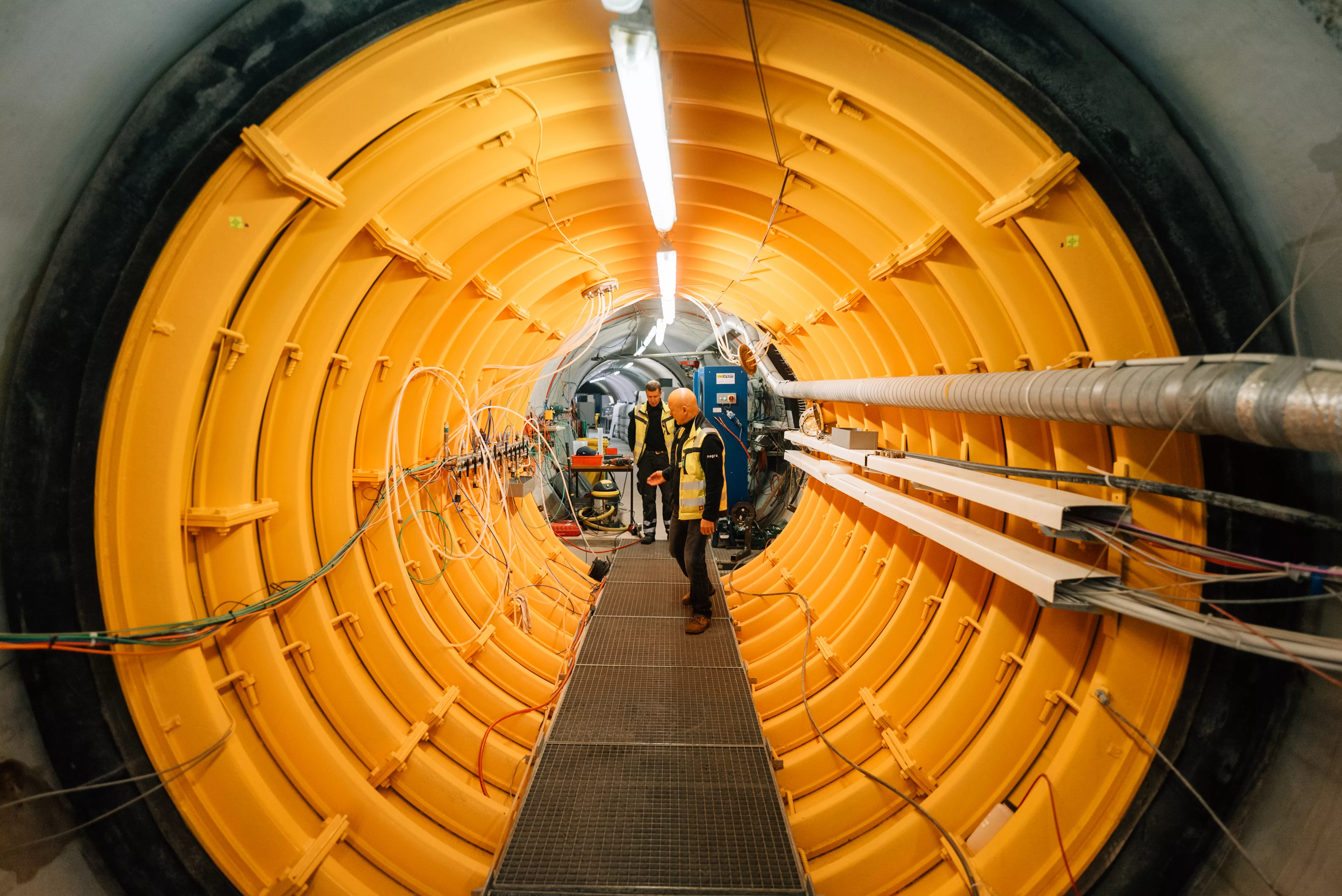
Yet, this man-made drift distorts the natural movement in the rock that one wants to investigate. In order to compensate for this disturbing pressure gradient, the Megapacker generates a counter-pressure into the rock mass at the drift wall. This eliminates the pressure differences: It is as if the drift did not exist at all.
Thanks to the megapacker, the hydraulic gradients in the rock are so stable that even the tidal forces between Earth and Moon become apparent.
Pulled from caterpillars
After years of service, the «submarine» had to be replaced by 2025. In order to get the giant as intact as possible from the drift, a lot of ingenuity was needed. With the help of a steel frame and a tracked undercarriage, the megapacker was pulled from the drift. Afterwards, the individual packers were replaced and the resin-coated rock wall was sanded down, followed by a new layer of resin and foil.
Finally, the «submarine» was pushed back in and the Megapacker was again filled with water in the annular space between the steel cylinder and the tunnel wall. Thus, the back pressure slowly rebuilt – and new experiments could be started.
You may also be interested in
We believe in transparency. Here you can find the latest updates and information about this landmark project.
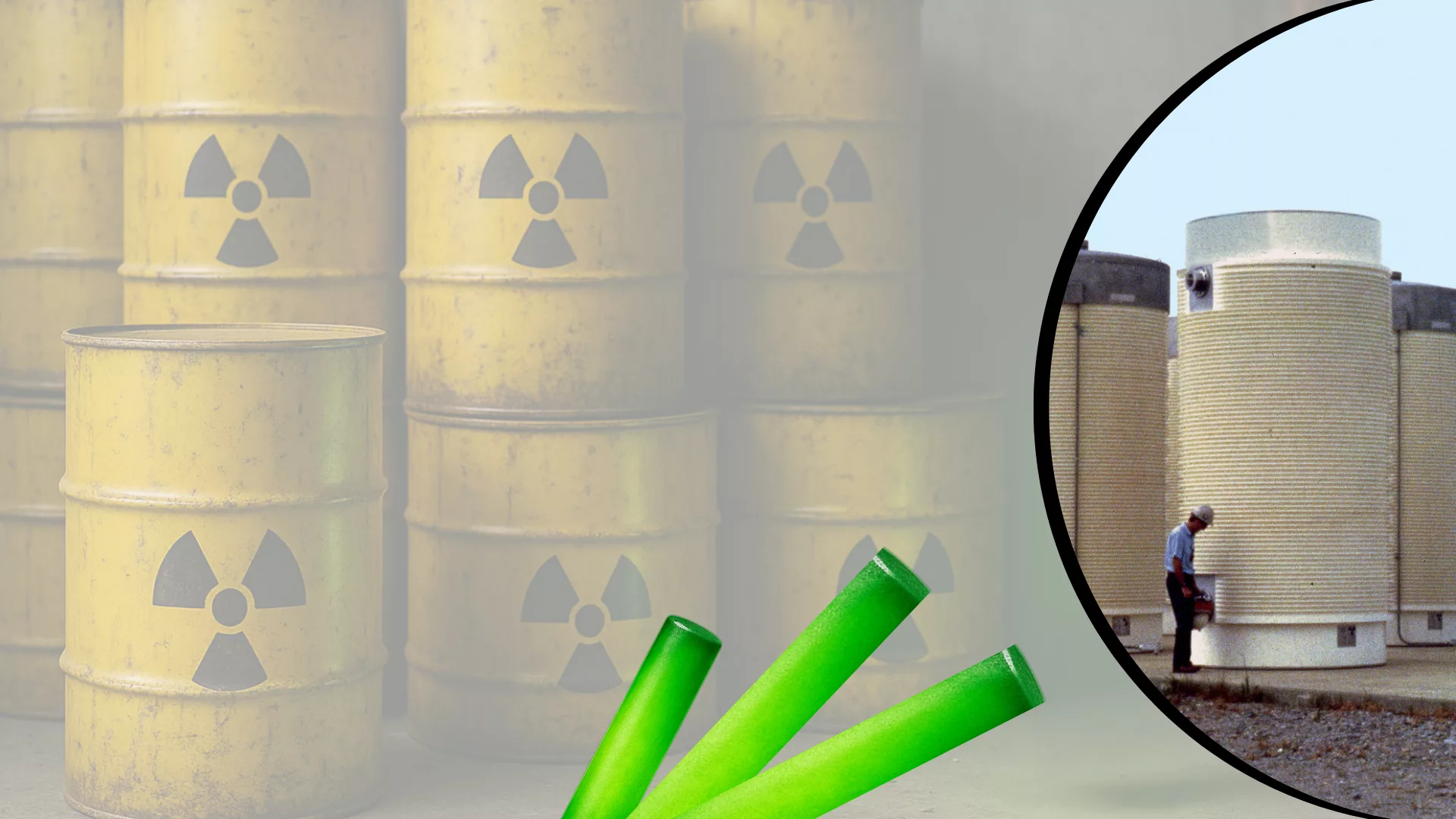
Yellow Barrels and Glowing Rods? What Our Radioactive Waste Really Looks Like
There are various types of radioactive waste. However, popular culture almost always misleads us about their properties…
.jpg)